
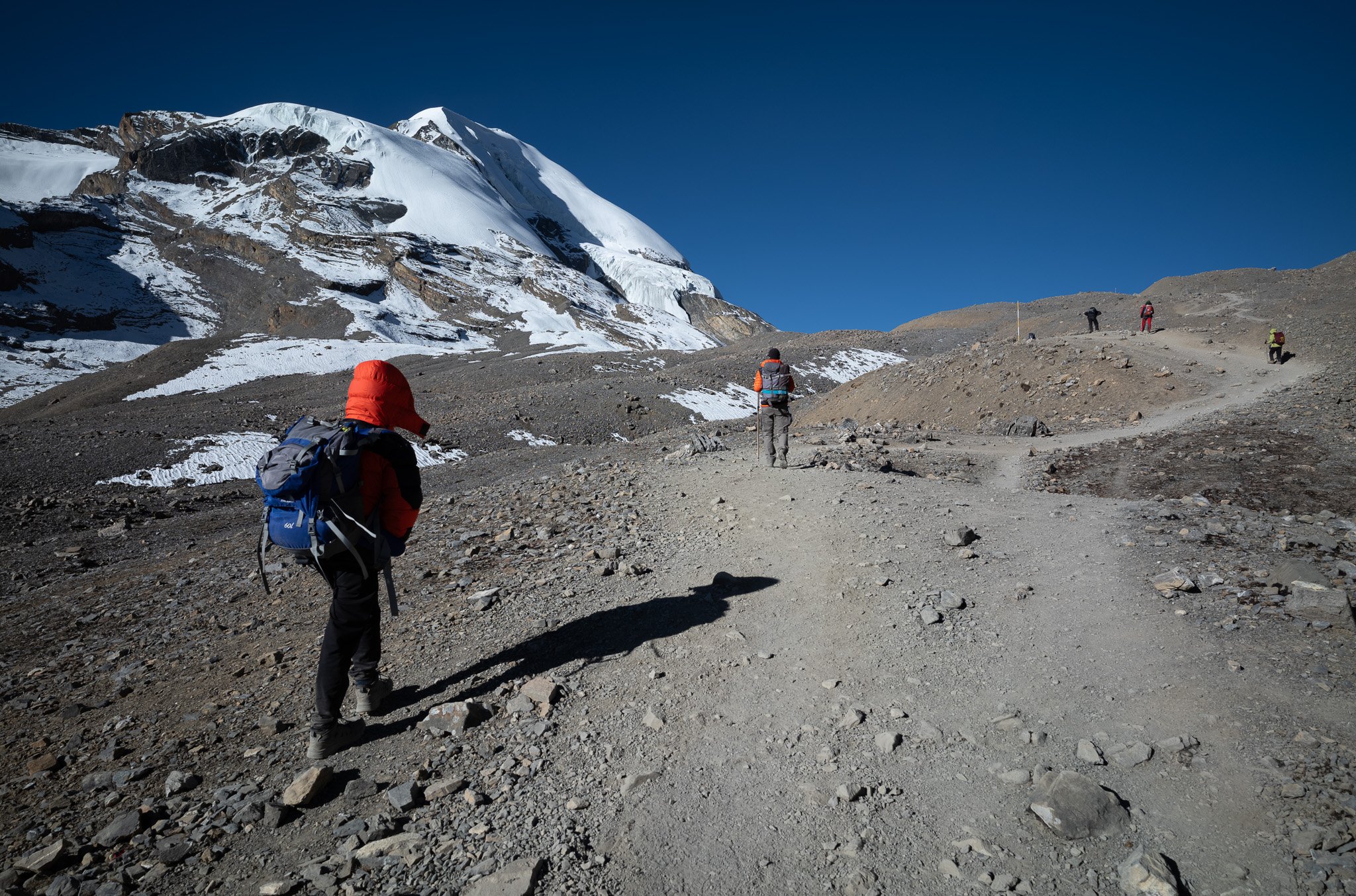
Historically, the Thorong La pass served as a vital trade route connecting Tibet to the north via the former kingdom of Lo (present-day Mustang) with the lowland regions of Nepal. Merchants would traverse the 5416m (17769ft) pass to exchange goods including salt, textiles and other commodities.
With the opening of Nepal to foreign visitors in the mid-20th century and the establishment of the Annapurna Circuit as a major trekking route later in the 1970s, the crossing of the Thorong La (“La” meaning “pass” in Tibetan) has gained a cult following among intrepid hikers around the world.
The legendary status of the pass has remained untarnished in the 21st century even as paved roadways supplanted decades-old trails on both ends of the circuit and once-cherished pathways tumbled into permanent neglect.
Why do we still obsess over Thorong La?
Through the years, crossing the iconic pass has almost become a rite of passage for global hikers, surpassing even the inexplicable need to arrive at the Everest Base Camp - a large cluster of Mountain Hardware tents pitched by hardworking Sherpas and the graveyard for spent oxygen cannisters.
But why do we still do it?
There is no simple answer. Because we have not done it yet. It’s that proverbial itch. It just needs to be done. And it’s a badge of honour for many global trekkers. The epic views along the way are a big bonus.
The Thorong La is also perfectly doable without camping, leaning on the teahouses and lodges that have sprung up over the years before and after the pass.
There is another high pass that links the Annapurna region to the other side that few talk about - the Mesokanto La pass (5305m/17404ft) via Tilicho Lake. The Mesokanto La is a wild pass that requires a few days of camping and a team of supporting cooks and porters.
The practical-minded and those without the extra cash to fund a mini-Mesokanto La expedition would naturally gravitate towards the Thorong La, the crossing of which allows travellers with more time to explore what’s on the other side, chiefly Upper and Lower Mustang.
Thorong La is by no means an easy 1000-metre climb in the wee hours of a frigid morning. The top is often windy. And afterwards, the long 1600-metre descent to the spiritual oasis that is Muktinath on the other side of the pass is equally hard on one’s knees and legs.
Here are some key steps you should take to maximise the chances of success:
Acclimatise. Acclimatisation is a process unique to every individual. Acute mountain sickness has no regard for age or fitness. Mild symptoms of AMS should be expected. With careful management, feelings of nausea, dull headaches at the end of the day, fatigue and a lack of appetite may run their course by the end of the first day.
Key to acclimatisation is to avoid sleeping at an altitude of more than 500 metres (1600ft) higher than the elevation at which you slept on the previous night. In the course of the day, climbing higher - at a slow and easy pace - will help in acclimatisation. Breathlessness will be inevitable. Slow down and avoid over-exertion. Find your “mountain pace”. Drink lots of water, as the higher you go, the thicker your blood becomes, which makes the circulation of oxygen in your body less efficient. Avoid consumption of alcohol. Do consider medication that helps prevent the onset of altitude sickness but always consult your family doctor first.
If symptoms worse, descend. And descend to the elevation where you last felt good.
Watch the weather. People have died trying to cross the Thorong La pass, caught in very bad mountain weather. In mid-October 2014, a sudden blizzard struck the region, killing dozens of hikers near the pass. More than a hundred others suffered from hypothermia and frostbite. A few others remained missing. It was the worst trekking disaster in Nepal to date. Since then, local authorities have erected emergency shelters on the other side of the pass. On our part, we must ensure that we have packed sufficient thermal clothing even if the sun is beating down on us and not a single cloud can be seen in the sky. If visibility suddenly deteriorates, retreat or avoid climbing at all until conditions improve.
Avoid trekking alone. There is a place for independent hiking. But high up in the Himalayas, walking solo is always a risk. Hike with a friend, or go with a local guide. A companion will help monitor any signs of altitude sickness. A local guide will help pull you to safety in the event of severe weather. A co-trekker can also call for help if you slip and fall, or suffer from some kind of injury. In November 2025, a German woman tragically died in a fall while trekking solo on a less visited trail in the lower Annapurnas.
Care for your body. Apart from the altitude, your body will be subject to all kinds of stresses on a multi-day trek, especially on trails involving sharp ascents and knee-jarring descents. As we always say, drink beyond the point of thirst. Urine should be clear and not yellow. Finding a toilet in the wild might be inconvenient but do not drink less to avoid Nature’s call. You will also be losing salt even though you are not sweating - add electrolyte powder to your drinks. Consume high-calorie meals. Your normal “office diet” will not cut it. Your knees and ankles will be particularly vulnerable on descents - use at least one trekking pole to help absorb the impact of walking down slopes. Talk to your family doctor on bringing painkillers and anti-inflammatory medication. Avoid eating meat on the trail; meat served at local teahouses may not be fresh and safe for consumption.