
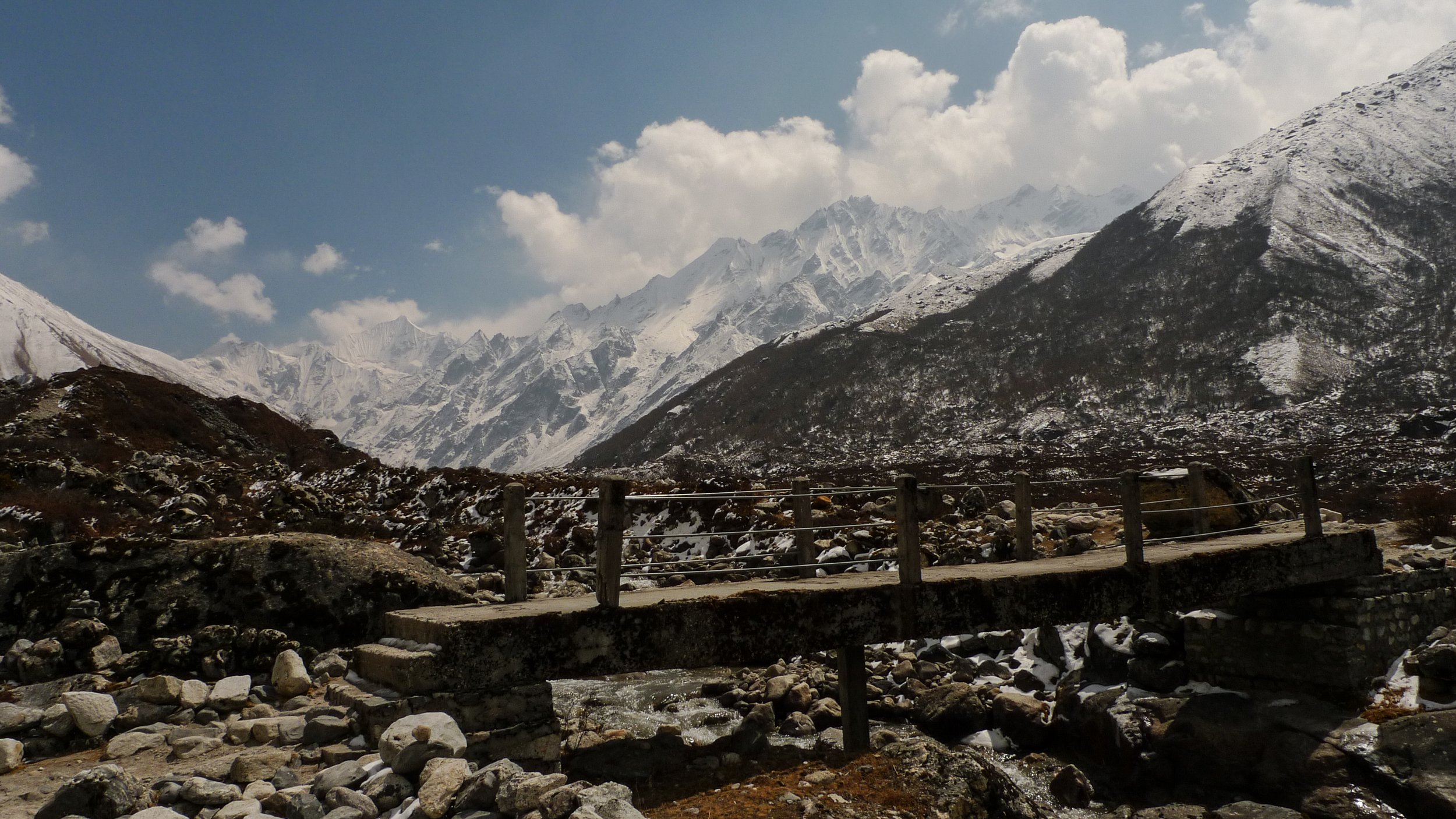
LANGTANG
“The Langtang has not only the austere beauty of ice mountains accentuated by the friendly smile of flowery meadows alive with cattle but it has the charm of reticence and the witchery of the unexpected”
H.W. Tilman
Treks in Langtang National Park are considered by many to be “easy”, with their shortness in duration, relative low elevations, and nearness to Nepal’s capital of Kathmandu. That is true.
They are by no means inferior, however, to the trails in the Annapurna and Everest regions in natural beauty and cultural richness .
The Annapurnas offer travellers the classic, all-in-one Himalayan experience. The Everest region is a timeless draw, with the congregation of the world’s highest peaks.
But the Langtang Himal (“snow-capped mountain range” in Nepali) speaks of a silent, rugged grandeur, and conveys a remoteness and otherworldly quality despite its close proximity to Kathmandu.
Hiking through the Langtang valley, bound by the Langtang Himal to its north and lesser but spectacular peaks to its south, also presents travellers a chance to observe, document and even immerse themselves in the local cultures and traditions of the Tamangs, an ethnic group of Tibetan origin.
The Tamangs are welcoming to foreigners and visitors. They are also a resilient people, soldiering on as they recover from the deadly magnitude-7.8 earthquake in April 2015 that shook the entire nation. The Tamangs are Buddhists, although their fascinating religious landscape is also infused with elements of shamanism, animism, and Hinduism.
Further Reading
“Nepal Himalaya” (1952), H. W. Tilman
“Nepal Langtang: Paradise Lost” (2015), Matti Munnukka
“Trekking Around Langtang, Gosainkund & Helambu” (2024), Sian Pritchard-Jones and Bob Gibbons