
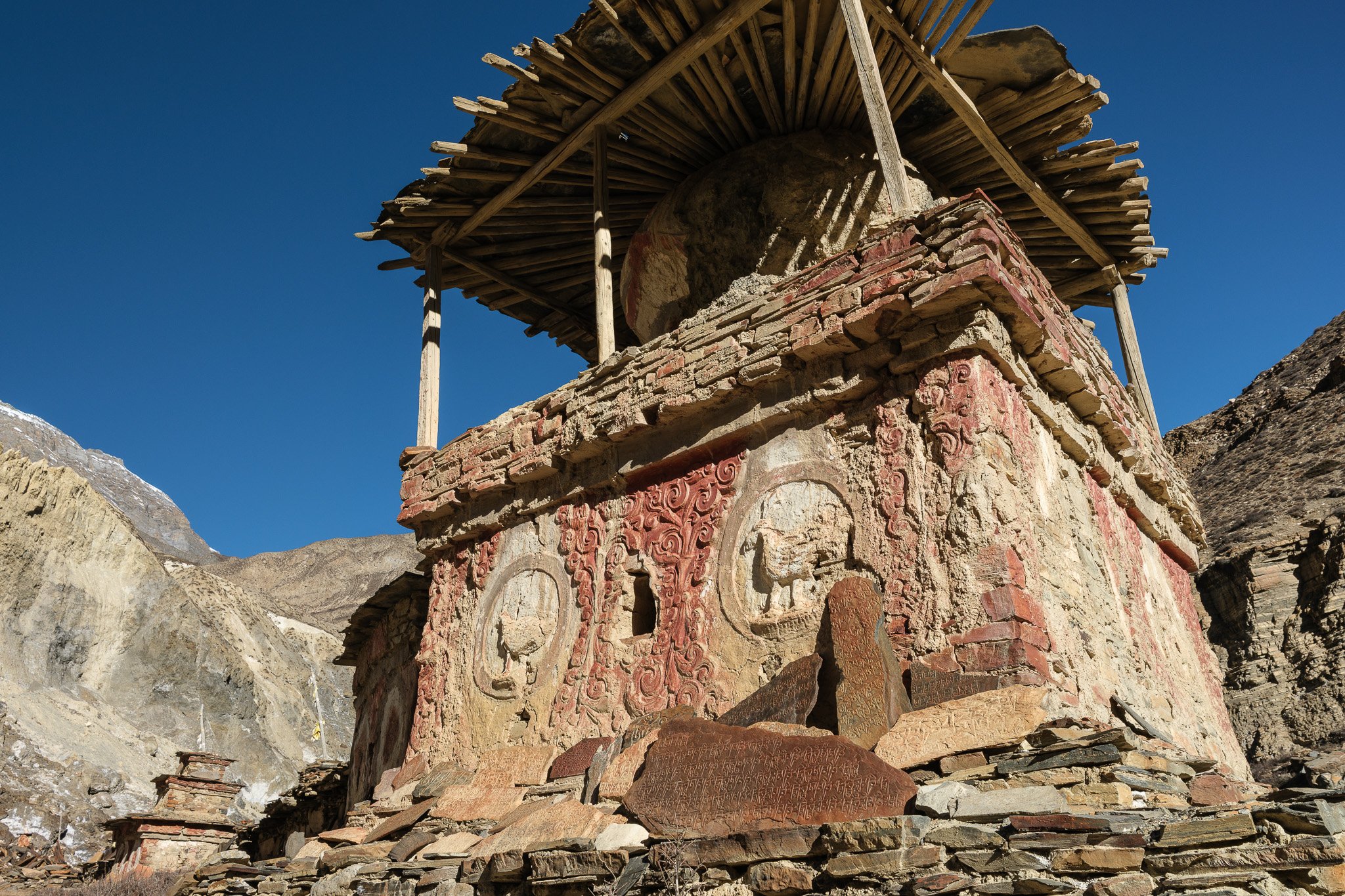
Nar Phu
There is only one way in and out of the valleys of Nar and Phu - through a deep, narrow chasm.
A handful of high mountain passes offer access, but crossing them is almost too arduous for outsiders. Nar and Phu - or simply Nar Phu - sound like a world away, but they in fact lie just north of the Upper Annapurna Circuit.
Populated by an ethnic group of Tibetan origins, Nar Phu has historically been so hidden that they had seemed almost “lost”. Indeed, in winter, the valleys are largely cut off from the larger world, hemmed in by deep snow and treacherously icy trails.
The region was open to foreign tourists in the early 2000s.
Visitor flows remain modest relative to the world-renowned Annapurna Circuit. A special permit is still required to enter Nar Phu, on Nepal’s border with Tibet.
But Nar Phu locals are starting to take matters into their own hands.
Since COVID-19 ended, they have begun building lodges to attract visitors.
Two-storey teahouses with warm, comfortable rooms have been erected next to ancient stone houses in the villages of Nar, Meta, Chiyaku, Kyang and Phu.
Today, Nar Phu offers visitors relative solitude and outstanding Himalayan mountain views, as well as insights into a way of life that has remained unchanged for centuries.
But there is also an edgy side to Nar Phu, being ports of call for Khampa guerrillas fighting Chinese communist forces invading Tibet more than half a century ago. Their former settlements and fortifications remain an eerie legacy to a violent past.
Finally, from Nar, very hardy trekkers may consider crossing the very difficult 5320m (17454ft) Kang La pass and join up with the Annapurna Circuit to the south.
Further Reading
“The Way of the White Clouds: A Buddhist Pilgrim in Tibet” (1966), Lama Anagarika Govinda
“Himalayan Pilgrimage” (1981), David L. Snellgrove
“Cloud-Dwellers of the Himalayas: The Bhotia” (1982), Windsor Chorlton
“The Great Game: On Secret Service in High Asia” (1992), Peter Hopkirk
“Voice for the Voiceless” (2025), Dalai Lama