
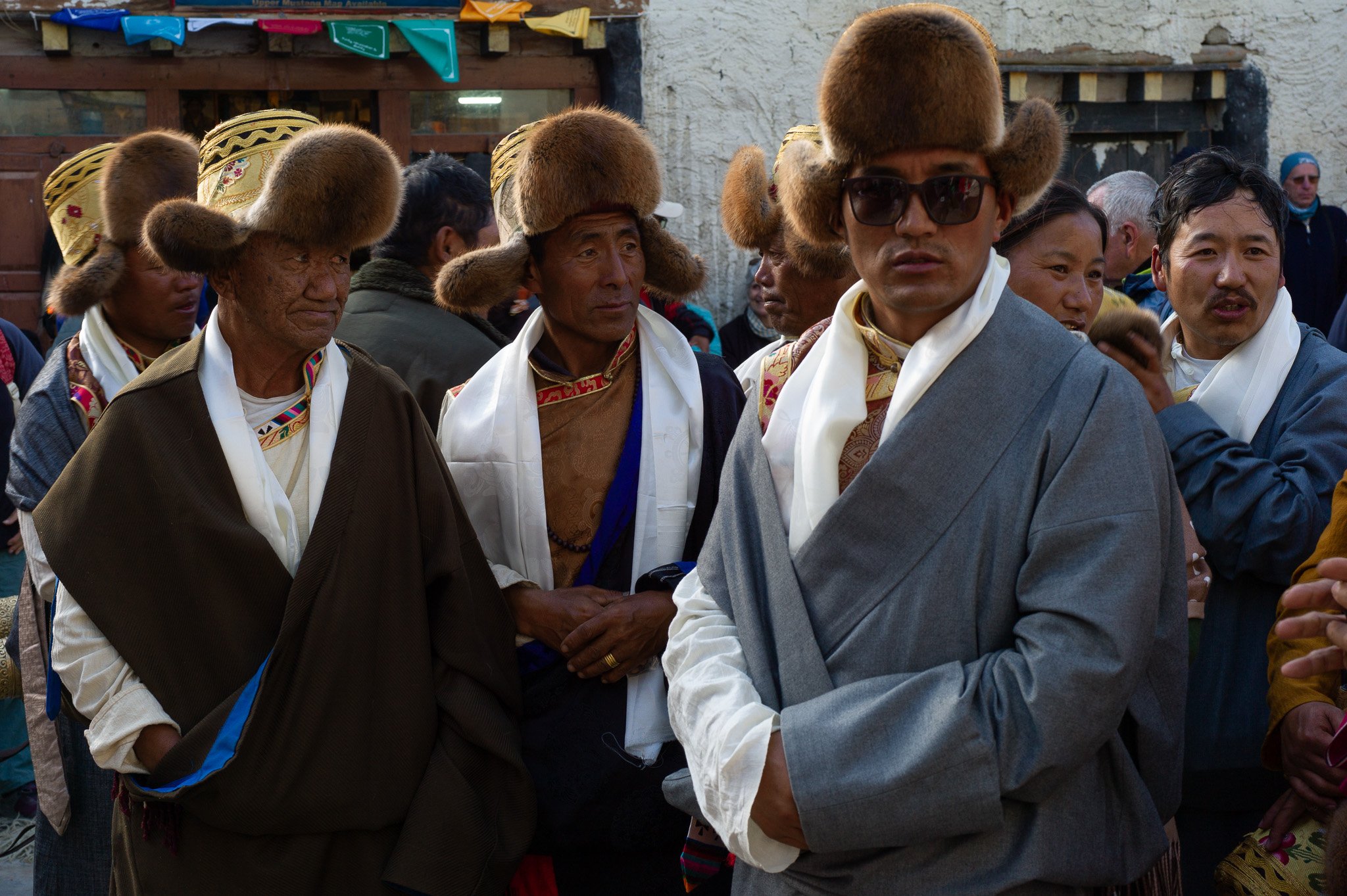
mustang
TOURS IN MUSTANG
In 1956, British Himalayan scholar David Snellgrove crossed the Himalayas in Nepal and set foot on the high Tibetan plateau. So struck by the desert-like landscape of Upper Mustang that he later wrote in his book “Himalayan Pilgrimage”:
“Towards evening as we descended from the last pass separating us from the basin of Kali Gandaki, we were able to see far north towards the strange land of Lo (Mustang) with its barren brown hills deeply cut and eroded, a chaotic and fantastic landscape in complete contrast to the cold majestic mountains to the south.”
Lo is said to have been founded by the Tibetan warrior Ame Pal in 1380, becoming its first king. Over time, Lo became an important node in a vast Himalayan trade network that included Tibet and India. It grew wealthy from the taxes that it imposed on the flow of goods and commodities, such as salt.
The mud-brick walls of Lo Manthang, the capital of Lo, were built soon after its founding almost 600 years ago. They still stand today, shielded by the Himalayas to the south from Monsoon rains. That makes them almost as old as Notre-Dame of Paris and the Leaning Tower of Pisa.
Then, at the end of the 18th century, Lo was annexed by Prithvi Narayan Shah, the king of Gorkha, who unified the many tiny kingdoms across the land into one single Kingdom of Nepal.
But there was probably a race of people in Upper Mustang far older than the Loba people, as the descendants of the Lo are known.
Since the 1990s, human remains believed to be at least 2000 years old have been discovered in many of the “sky caves” that dot the high-altitude canyons in the region. Who were those people? Where did they come from? How did they get in and out of caves dug high into the cliffs of Mustang’s canyons? Those questions remain unanswered to this day.
But change is afoot in Upper Mustang.
In 2008, Jigme Dorje Palbar Bista stepped down as the king of Upper Mustang after Nepal’s own monarchy was overthrown and the kingdom became a republic. That ended the unbroken reign of the Lo dynasty first founded by Ame Pal. Bista died in 2016.
The cultural legacy that Bista once fought to preserve now looks into an uncertain future.
Major annual festivals in Lo Manthang - such as the Tiji Festival celebrating the triumph of good over evil, and the Yartung Festival marking the end of the summer harvest – are still observed.
But villages across Upper Mustang are greying, and their already very tiny populations are hollowing out, as the young look for work in cities and abroad. Fields are also increasingly left empty and herds of yak and sheep are growing smaller, with agriculture and pastoralism no longer the pillars of the local economy.
Even the very walls of Lo Manthang are under threat as higher rainfall fuelled by global warming undercuts the very foundation of centuries-old fortifications.
The medieval homes, chortens (stupas), monasteries and Bista’s former royal palace within those very walls are similarly at risk of collapse.
The outlook for the estimated 10,000 sky caves etched into Mustang’s canyons of porous limestone and shale now appears precarious.
Tourism might be one way of saving the culture and archaeological legacy of Upper Mustang.
Although open to foreigners since 1992, visits to Upper Mustang remain highly restricted.
Foreign visitors are required to pay $500 for a 10-day special permit to enter, whether or not they spend 3 or the full 10 days in Upper Mustang. They then need to pay $50 for every additional day.
To boost tourist numbers, Nepal scrapped that policy in November 2025 in a landmark change.
Now, visitors would only need to pay $50 for each day they spend in Upper Mustang, defined as areas north of the town of Kagbeni.
It remains to be seen if tourism numbers would rise. Over the years, foreign visitors to Upper Mustang have been dominated by tourists from France, the United States, Germany, India and Australia.
Bista’s nephew, the current unofficial king of Mustang, believes tourism will save Mustang.
Any trek or tour in Mustang can be easily preceded by a trek over the iconic Thorong La pass as part of the Annapurna Circuit for active travellers.
Further Reading
“Journey to Mustang” (1952), Giuseppe Tucci
“Mustang: A Lost Tibetan Kingdom” (1967), Michel Peissel
“Himalayan Pilgrimage” (1981), David L. Snellgrove
“Mustang: The Culture and Landscape of Lo” (2014), Michael Beck
“The King of Mustang Will See you Now”, National Geographic (January 2023)