
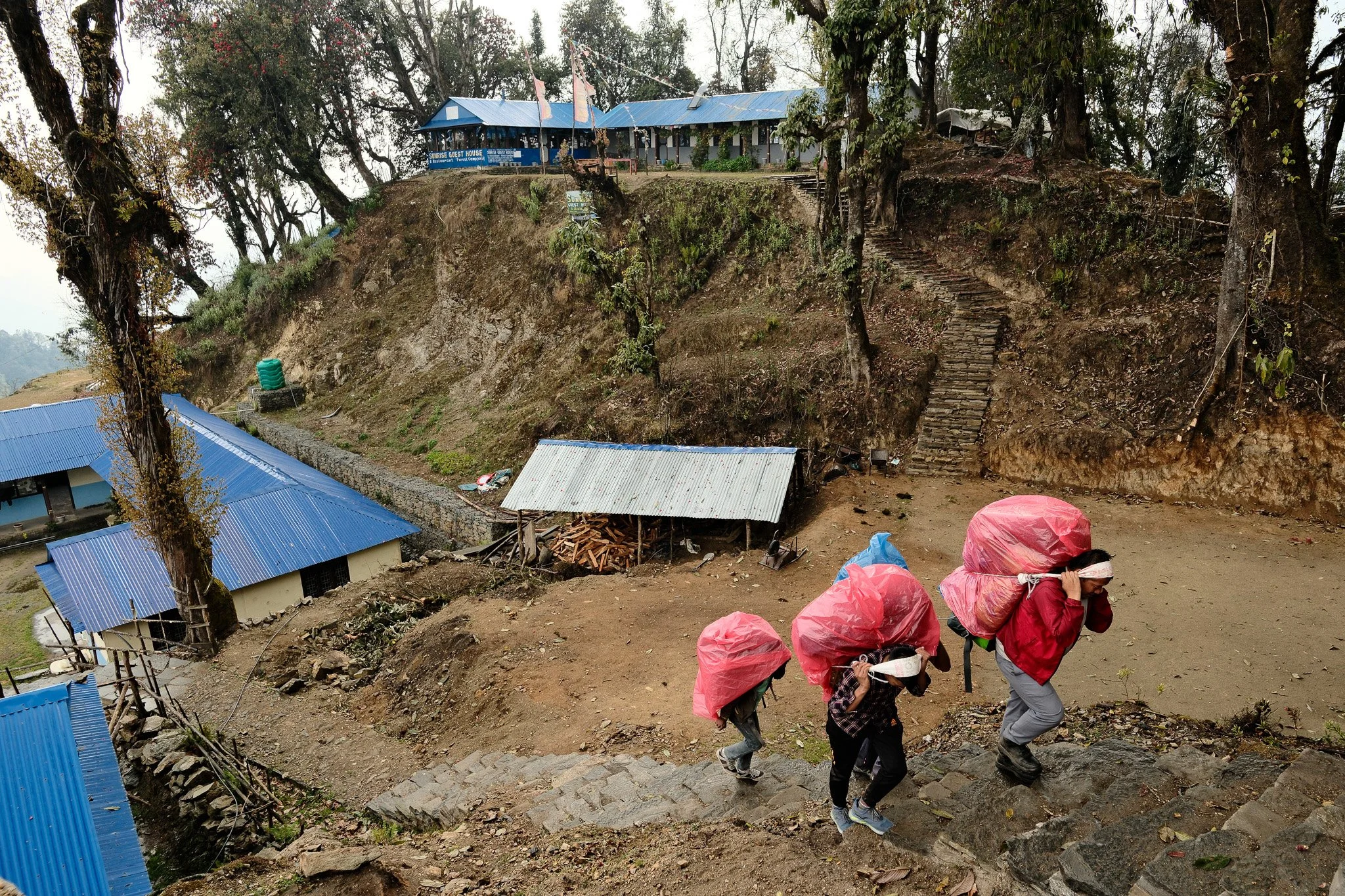
Self-sufficiency is the goal of some hikers. They fully rely on their own knowledge and intelligence. They have their maps and GPS coordinates. Some even bring their own food and abstain from stays at local lodges and teahouses.
And they carry all of their luggage - change of clothes, hiking equipment, cameras and tripods. The list goes on.
At sea level, carrying a towering 80-litre backpack filled to the brim with life’s essentials for days and even weeks is a tall order for the average hiker.
It gets much harder at altitude, and there is no shortage of that in Nepal. Your travel companion(s) may also not be as hardy as you are. Your teenage children might complain and you end up carrying their share of the burden. In the end, the physical stress you expect to triumphantly endure may turn out to be mental distress on a daily basis.
And then on Day 5, deep in the mountains, the right shoulder strap of your backpack broke. Then what?
Some hikers struggle with the idea of having someone else carry (most of) their load - it’s not right, it’s not ethical.
But that implies that being a porter is somehow not an honest way of making a living.
In an impoverished country like Nepal, economic opportunities, especially regular work and regular pay, are hard to come by.
Everyday, at Kathmandu’s sole international airport, thousands leave for other countries in search of better wages.
Those who can’t leave remain in Nepal eking out a living as drivers, construction workers, and even soldiers. Many flock to the tourism sector, a pillar in Nepal’s economy.
A porter would count himself lucky if he gets to go on more than 5-6 treks during the peak spring and autumn trekking seasons. During the summer monsoon and winter months, he returns to his village, hoping that his porter earnings could sustain him and his family during the times when foreign tourists stay away.
Traveller’s guilt is a First World problem.
But porters would not understand or appreciate that. Foreign tourists are a source of vital family income. By employing porters, visitors lighten the load on their back and focus on staying fit and healthy while on their trek.
At the same time, porters are not servants. They are not inferior beings. They are human beings who might have fallen on hard times.
If you have signed up for a trek with us, do talk to us about porters! Especially if you have concerns about fair treatment and compensation.
Safe travels!