
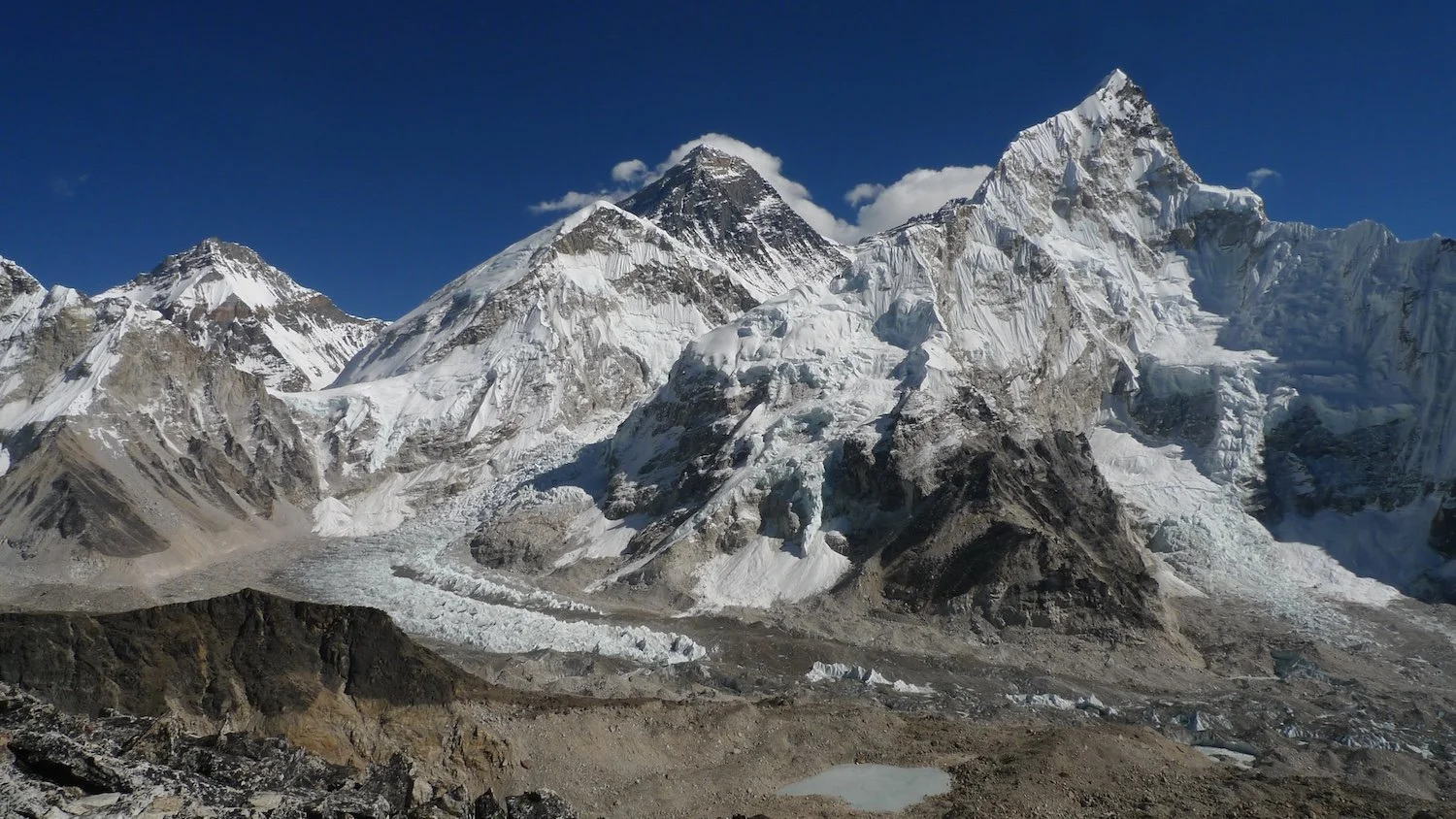
everest
“Because it’s there”
TREKS IN EVEREST
Nepal’s Everest region is one of the world’s most visited trekking destinations, and with good reason. Encompassing Sagarmatha National Park, a UNESCO World Heritage Site, the rugged region boasts snow-capped mountains, deep valleys and Sherpa villages that draw thousands of international adventurers each year.
Besides Mount Everest, the planet’s highest summit at 8,849m (29,032ft), trekkers are enthralled by its towering neighbours like Lhotse, Nuptse and the iconic shape of Ama Dablam. Classic trekking routes such as the Everest Base Camp Trek offer outstanding views of the Himalayan giants. The region’s biodiversity, including elusive snow leopards and Himalayan tahr, adds ecological wonder, while Tibetan Buddhist monasteries such as Tengboche provide serene cultural stops amid prayer flags fluttering in the wind.
Trekkers often begin their journeys in Lukla, flying into one of the world’s most thrilling airports on a 19-seater propeller plane. The route through pine-scented trails soon takes them to Namche Bazaar, a bustling hillside Sherpa trading hub. From there, well-defined paths lead to iconic viewpoints like Kala Patthar, which offers unforgettable panoramic vistas of Everest at sunrise.
The area’s allure extends beyond its scenery. High-altitude tea houses provide cosy respites, serving hearty dal bhat – Nepal’s national lentil rice dish – and yak cheese amid stories of mountain life. Sherpa festivals, such as Mani Rimdu at Tengboche monastery, feature masked dances and rituals that preserve centuries-old traditions passed down through generations.
The Everest region first captured Western imaginations in the early 20th century. British expeditions in the 1920s, led by figures like George Mallory, attempted ascents from the Tibetan side, famously declaring “because it’s there” before Mallory’s disappearance in 1924 alongside Andrew Irvine. Other climbing pioneers, including the 1930s Swiss and German teams, mapped routes and documented the harsh conditions. Access improved after Nepal opened its borders in the 1950s, culminating in the triumphant 1953 ascent by New Zealander Sir Edmund Hillary and Sherpa Tenzing Norgay via the South Col route. Their success transformed the region into a global symbol of exploration, inspiring generations of climbers and adventurers.
Further Reading
“High Adventure: The True Story of the First Ascent of Everest” (1955), Edmund Hillary
“Everest: A Mountaineering History” (1981), Walt Unsworth
“Into Thin Air: A Personal Account of the Everest Disaster” (1997), Jon Krakauer
“Ghosts of Everest: The Search for Mallory & Irvine” (1999), Jochen Hemmleb
“The Six Mountain-Travel Books” (1999), Eric Shipton