
Frozen in time: nepal’s mustang
Photos of centuries-old Buddhist monasteries, shrines and the capital of a former Himalayan kingdom in a barren and windswept region on the edge of the Tibetan plateau
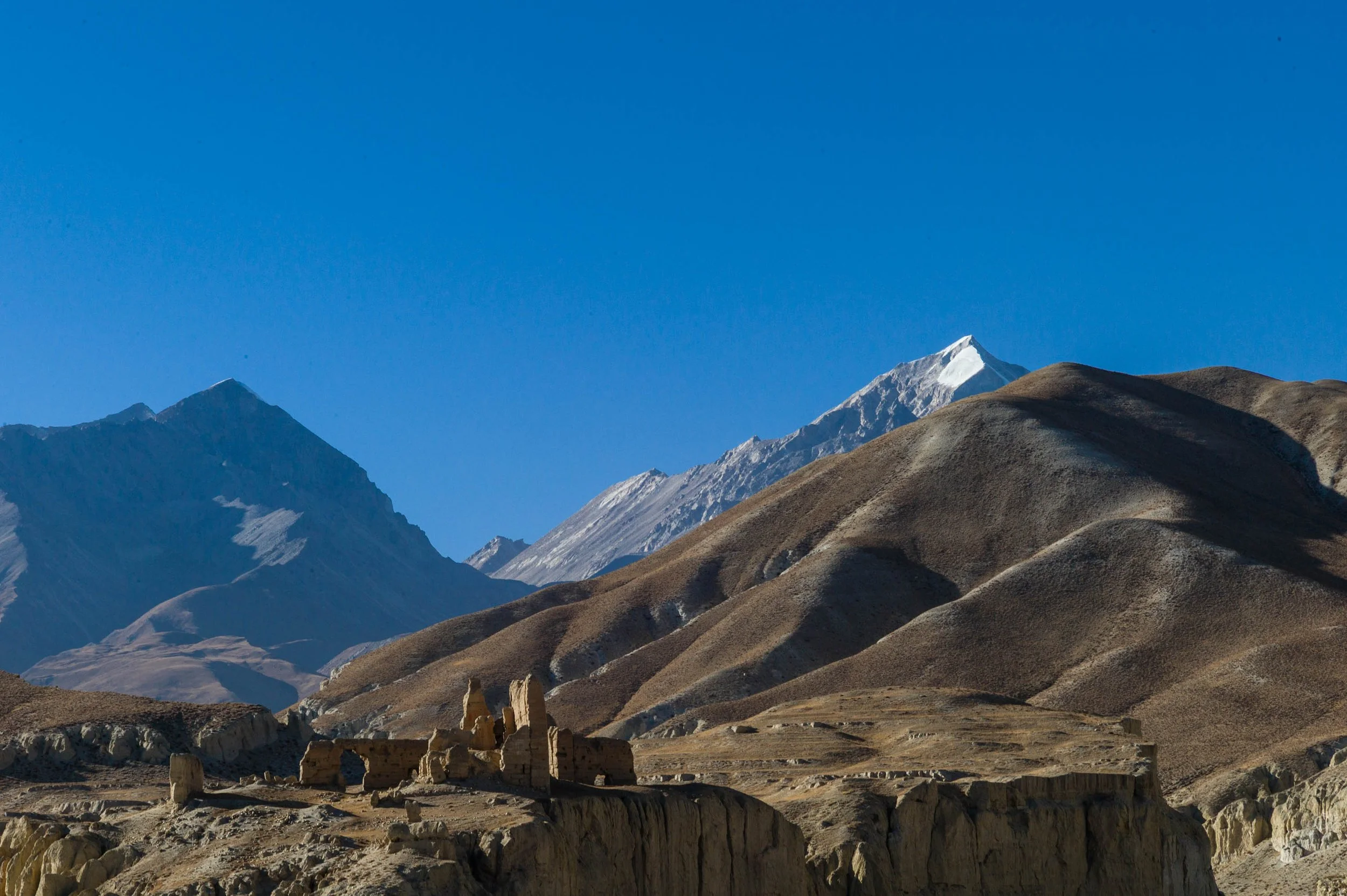
Mustang, formerly the Kingdom of Lo, is a remote region in Nepal north of the Himalayas that opened to visitors in 1992.
Founded in the 14th century, Mustang was essential in the Himalayan trade network and the spread of Buddhism. Its capital, Lo Manthang, is famed for ancient mud-brick walls.
Visitors need a special permit to enter one of the final frontiers for tourism in Nepal. A licensed guide is also required in this restricted area.
But rules are starting to ease, as part of a nationwide push to attract foreign tourists.
Left: The Kali Gandaki river originating from Tibet flows through the arid region of Mustang, which lies in a rain shadow north of the Annapurna mountain chain; Right: A nun performs a solo prayer session at a gompa in Muktinath, a town that sits on the boundary of the world of Tibetan Buddhism and Hinduism.
Left: The mud brick walls of buildings in the village of Tangbe, increasingly under threat as climate change starts to bring more rainfall to a region that historically receives little precipitation; Right: A young girl carries a loaded basket secured by a strap around her forehead, a common method of ferrying goods in Nepal.
In many rural villages in Nepal, young able-bodied men often migrate to cities in search of work, leaving behind the elderly, women and very young children.
Left: A drum and a cymbal in Ghar Gompa, a Tibetan Buddhist monastery said to have been built in the 8th century; Right: A young English-speaking monk outside a gompa in Lo Manthang, previously the capital of the kingdom of Lo.
The walled city of Lo Manthang is now just one of dozens of villages in Mustang. It sits atop a shelf by the Kali Gandaki river, about 20 kilometres (12 miles) from Nepal’s border with Tibet in China.
Left: A line of chortens, or stupas, in Lo Manthang; Right: A picture of a young woman painted onto the entrance to a home.
Left: Smoke billowing from homes still using traditional wood stoves; Right: Nyphu gompa, a monastery hewn into a shale cliff, in the village of Chhoser near Lo Manthang.
During the three-day Tiji Festival each May, monks from the three monasteries in Lo Manthang gather in the small square outside the former royal palace to perform ceremonial dances, drawing local people from other villages as well as hundreds of foreign tourists.
Left: Players of the ra-dung, a horn that produces a low and dramatic sound, take a break to interact with a young child at the annual Tiji Festival, held to celebrate the victory of good over evil. Right: Players of the gyaling, or trumpet, at the festival.
Left: A young monk performs a very energetic ceremonial dance at the Tiji Fesival; Right: Two men fire an ancient musket at the close of the festival, signifying the victory of good over evil.
Apart from Mustang’s colourful festivals, the region’s wild and little explored landscape also attract adventurers hikers. The extreme dryness of Mustang has also kept ancient shrines, monasteries and stupas in good condition, although their preservation is increasingly being tested by bouts of unexpectedly wet weather as climate change gathers pace.